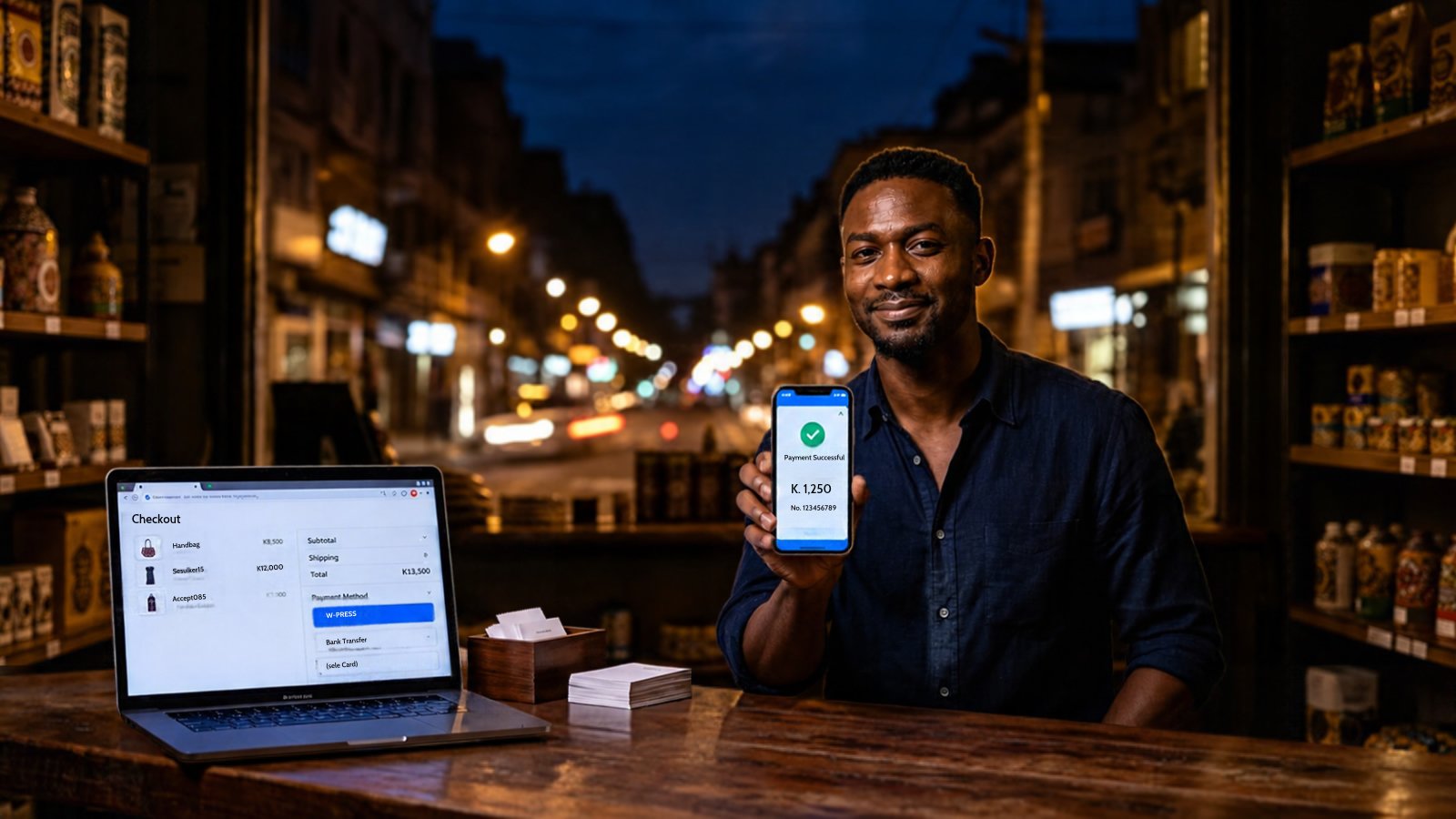

“We need an app.” It’s one of the most common sentences we hear from Kenyan business owners, and about half the time it’s wrong. Not because apps are bad, but because the problem they’re trying to solve, more customers, faster orders, fewer phone calls, is often solved better and cheaper by a good mobile website, a WhatsApp flow or a USSD service. The other half of the time, an app is exactly right, and waiting costs them. Mobile app development in Kenya is a serious investment, so before you brief a developer, this guide helps you answer the only question that matters first: do you need an app at all?
It goes deep on one decision inside our complete guide to software companies in Kenya, which covers how custom software projects work, what they cost and how to choose a team. Here we focus on mobile apps specifically.
What “Mobile App Development in Kenya” Covers
A mobile app is software installed on a phone through the Google Play Store or Apple’s App Store. In Kenya that overwhelmingly means Android, with iOS a smaller but valuable segment, especially among corporate and higher-income users. Apps can be built natively for each platform, or cross-platform with frameworks that share one codebase across Android and iOS. There are also progressive web apps (PWAs), which are websites that behave like apps: they can be added to the home screen, work offline to a degree, and send notifications, with no app store involved.
The right choice depends on what you need the app to do, not on what sounds impressive in a board meeting.
Five Signs Your Business Needs an App
- Customers use you repeatedly. Deliveries, rides, savings groups, loyalty schemes, subscriptions, school fees: anything people do weekly or daily benefits from a home-screen icon and a saved login.
- You need the phone’s hardware. GPS tracking for a fleet, the camera for document capture, offline data collection in the field, push notifications that must arrive. Websites can do some of this, but apps do it reliably.
- Your staff work away from a desk. Sales reps, field agents, delivery riders and technicians need tools that work with patchy data and sync later. An internal app often pays for itself in saved hours and lost paperwork.
- Payments and identity are central. Fintech, lending, insurance and wallets need the security, biometrics and tight M-Pesa flows that an app handles best. Our article on M-Pesa integration explains the API side, which applies to apps as much as websites.
- The product is the app. If you’re building a platform or marketplace, the app isn’t a channel, it’s the business.
Five Signs You Don’t (Yet)
- Customers find you once and buy once. A restaurant, a law firm or a hardware shop gets more from being found on Google than from an icon nobody installs. A mobile-friendly site and strong local listings win here.
- Your website isn’t working yet. An app won’t fix a weak website; it adds a second thing to maintain. Get the site right first, as our guide to web design in Kenya explains.
- You can’t name the feature a website can’t do. If every item on the wishlist (catalogue, orders, payments, contact) works in a browser, build a great mobile site or a PWA and keep the money.
- Your customers are on basic phones or tight data. For many markets a USSD service or a WhatsApp Business flow reaches more people than an app that needs storage space and a download.
- There’s no budget for year two. Apps need updates for every new Android and iOS release, security patches, store compliance and support. If the budget ends at launch, the app will too.
The Alternatives Worth Considering First
- A mobile-first website: fast on Safaricom and Airtel data, easy to update, found through search, no download. For most SMEs this is the right first move.
- A progressive web app: the website with app-like behaviour. Good for ordering, booking and portals where you want a home-screen icon without the app store.
- WhatsApp Business and the WhatsApp API: catalogues, order updates and support where your customers already are.
- USSD: works on every phone, no internet needed, ideal for balance checks, registrations, voting and simple transactions. Our own E-TAM audience voting platform is an example of choosing the channel to fit the audience rather than defaulting to an app.
- Off-the-shelf tools: POS, delivery and booking apps already exist for many sectors. Custom makes sense when none fit your process.
If You Do Need an App: Native, Cross-Platform or PWA?
Native apps are built separately for Android and iOS. They give the best performance and deepest hardware access, at the cost of two codebases. Cross-platform frameworks let one team build for both from a single codebase, which lowers cost and keeps features in sync; for most business apps in Kenya this is the sensible default. A PWA is cheapest and fastest to ship but has limits on hardware access and on iOS. A good development partner will recommend one based on your features, not on what they happen to prefer.
How a Mobile App Project Runs
- Discovery: who the users are, what they must be able to do, and what success looks like. This is where “we need an app” becomes a written scope.
- Design: wireframes and clickable prototypes, tested with real users on real Kenyan phones before any code is written.
- Build: in stages, with a working version you can try every few weeks. Integrations (M-Pesa, SMS, maps, your existing systems) go in here.
- Testing: on a range of Android devices and versions, on slow data, and offline. Kenyan users don’t all have the latest phone.
- Launch: store listings, screenshots, privacy policy, and the developer accounts, which should be in your business’s name.
- Support and updates: agreed in advance, with a monthly or annual arrangement for fixes, OS updates and new features.
What Drives the Cost
App costs vary enormously, and anyone who quotes without a scope is guessing. The main drivers are the number and complexity of features, whether you need one platform or two, the integrations (payments, SMS, identity checks, existing databases), the backend and admin dashboard behind the app, design depth, and the ongoing maintenance. Store developer accounts, hosting for the backend and third-party services add running costs. Set a budget for the first year of operation, not just the build, and you’ll avoid the most common unpleasant surprise.
Mistakes to Avoid
- Building everything in version one. Launch with the few features users need most, learn, then add.
- Ignoring the backend. The app is the visible part; the server, database and admin tools are where most of the work and risk sit.
- Letting the developer own the accounts. Play Store, App Store, hosting and domain accounts belong to your business.
- Skipping real-device testing. An app that works on the developer’s flagship phone and crashes on a customer’s budget Android is a failed app.
- No plan for getting installs. An app with no marketing is an expensive file on a server. Decide how customers will hear about it before you build it.
Our article on why Kenyan SMEs are losing to bigger competitors makes the broader case: the businesses pulling ahead aren’t the ones with the most software, but the ones whose software fits how they actually work.
Frequently Asked Questions
How long does mobile app development take in Kenya?
A focused first version with a handful of features typically takes a few months from discovery to store launch. Integrations, approvals and testing on many devices are what stretch timelines, so agree the scope before anyone estimates a date.
Can an app take M-Pesa payments?
Yes. Apps use the same Daraja API routes as websites, including STK Push prompts, and need the same business Paybill or Till account before going live.
Do I need both Android and iOS?
Start with where your users are. For most Kenyan consumer apps that’s Android first, with iOS added when the numbers justify it. A cross-platform build keeps that option open without a second project.
Decide With a Scope, Not a Slogan
Write down what your customers or staff need to do on their phones, then ask which channel does it best: website, PWA, WhatsApp, USSD or an app. If the honest answer is an app, build it in stages, own the accounts, and budget for the years after launch. If it isn’t, you’ve just saved yourself a large bill and a maintenance burden. Either way, the process for choosing and briefing a team is the same, and it’s laid out in our complete guide to software companies in Kenya.
Twelvecity Digital builds mobile apps, PWAs and the systems behind them for Kenyan businesses, and we’ll tell you plainly if a website would serve you better. Explore our software development services, then call +254 717 806 693, email hello@twelvecitydigital.com or contact us for a scoping conversation.
Disrupt. Build. Dominate.