Ask three branding companies in Kenya for a quote and you’ll get three very different numbers for what sounds like the same job. One sends a logo in a week. Another sends a logo, a colour palette and a letterhead. The third talks about positioning, audiences and a forty-page guideline document and takes two months. None of them is cheating you. They’re selling different things, and unless you know what a complete brand kit includes, you can’t compare them, and you’ll probably buy the wrong one. This guide lays out what you should receive from a branding project, how to tell the companies apart, and what to ask before you sign.
It goes deep on one part of our complete guide to logo design in Kenya, which covers logo types, the design process, costs and how to choose a designer. Here we look at everything around the logo: the full kit.
What Branding Companies in Kenya Actually Do
The phrase covers a wide spread of businesses. Some are printing and signage firms that “brand” vehicles, uniforms and banners with a logo you already have. Some are freelance designers who produce logos. Some are creative agencies that build the whole identity, and a few are strategy consultancies that work out what the brand should stand for before anything gets drawn. Each is useful, but for different jobs, and mixing them up is how a company ends up with a lovely logo and no idea how to use it.
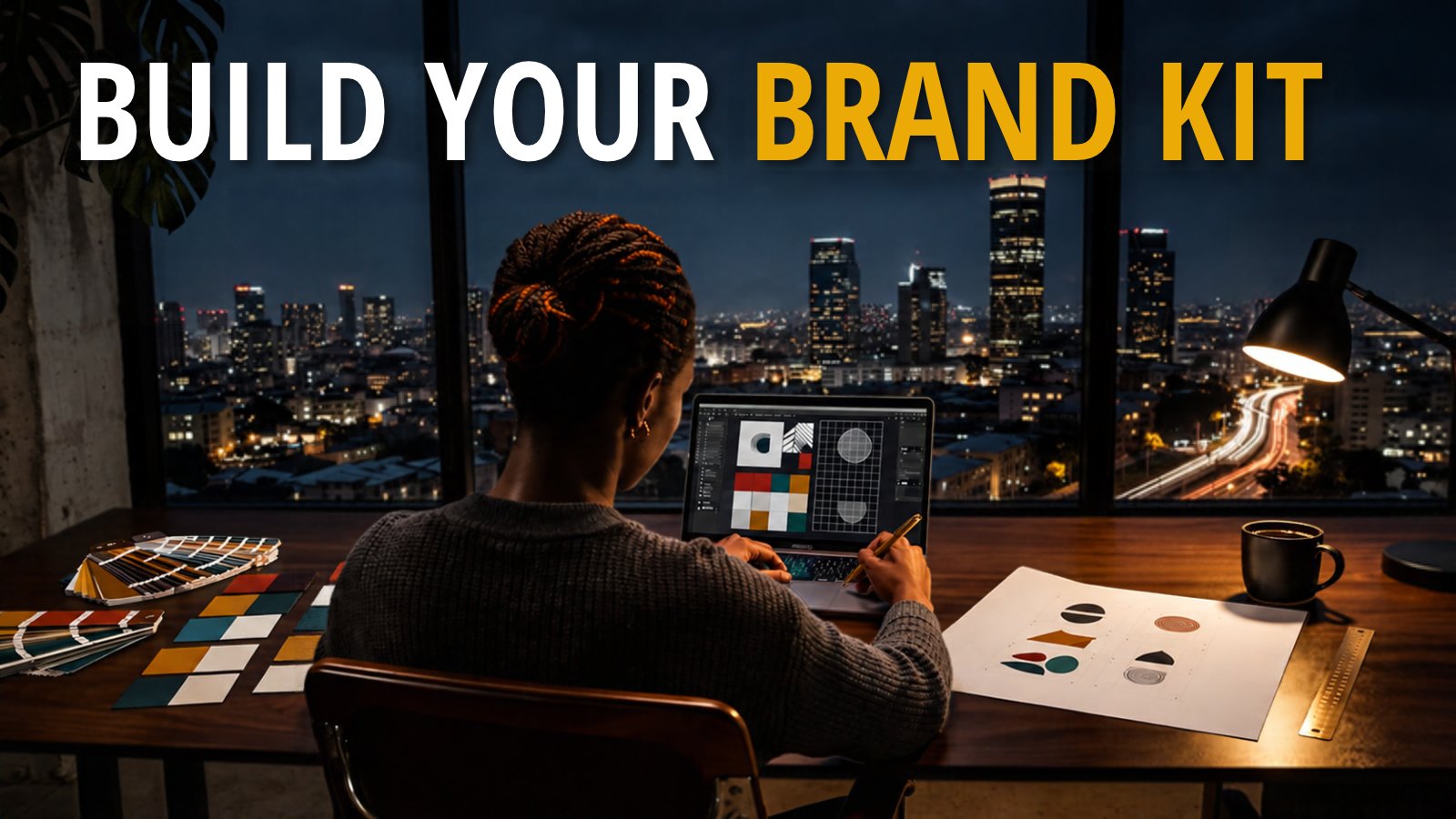
When you need a brand built, not just printed, you’re looking for a company that delivers a brand kit: the complete, documented set of assets and rules that let anyone, from your receptionist to your web developer, present the business consistently.
What a Complete Brand Kit Includes
1. Strategy on a page
Before the visuals, a short written foundation: who the brand is for, what it promises, how it’s different from the competitors a customer would compare it with, and its personality in a few words. This is what every design decision is tested against. Without it, feedback becomes “I don’t like blue”, and the project drifts. Our article on brand strategy in Kenya’s crowded market explains why this page is worth more than the logo it leads to.
2. The logo system
Not one logo file but a system:
- the primary logo, plus horizontal and stacked versions for different spaces
- a symbol or icon version for social profiles, app icons and favicons
- full-colour, single-colour, black and reversed (white) versions for dark backgrounds, embroidery and print
- clear-space and minimum-size rules so it’s never crammed or shrunk into mush
- every version in vector formats (SVG, EPS or PDF) and in PNG with transparent backgrounds
If you only receive a JPEG, you haven’t received a logo. You’ve received a picture of one.
3. Colour palette
Primary and secondary colours with their exact values for every use: HEX and RGB for screens, CMYK for print, and Pantone references for signage, uniforms and vehicle wraps where exact matching matters. The kit should say which colours lead, which support, and which combinations to avoid for readability.
4. Typography
The brand fonts for headings and body text, where to get them, licensing notes, and a fallback for environments such as email or documents where the brand font isn’t available. A good kit shows the type hierarchy: how a heading, subheading and paragraph relate.
5. Imagery and graphic style
Guidance on photography (real Kenyan people and places or stock? bright or moody?), illustration style, icon style, patterns and any graphic devices that belong to the brand. This is what makes a social post recognisably yours before anyone reads the name.
6. Voice and messaging
How the brand speaks: tone, the words it uses and avoids, a tagline if there is one, and short boilerplate descriptions for profiles, proposals and press. Visual consistency without verbal consistency is only half a brand.
7. Templates and applications
The assets people use every week, already built in the brand: business cards, letterhead, email signature, presentation template, invoice, social media post templates, and the business profile. For many Kenyan SMEs the company profile and the pitch deck are the most-used branded items they own, so make sure they’re in scope.
8. The guidelines document
Everything above, collected into one document that a new designer, printer or agency can follow without calling you. Its length should match your business; a one-person consultancy needs a few pages, a multi-branch company needs more.
9. Organised, owned files
A folder structure with every asset, handed over with full rights, so the business owns its identity outright. Confirm this in the contract.
How to Tell the Companies Apart
When comparing branding companies in Kenya, look past the quote total and ask what’s in it:
- Logo-only designers: fine for a fast start or a side project. Expect a logo system at best, and plan to commission the rest later.
- Design studios and digital agencies: deliver the full kit and usually the applications too, from the website to social templates, so the brand works where customers actually see it. This suits most growing businesses.
- Strategy-led agencies: go deepest on positioning and research, at a higher cost and longer timeline. Right for rebrands, mergers and companies competing in crowded national markets.
- Printing and signage companies: essential for producing branded items, but they apply a brand rather than create one. Bring them your finished kit.
Questions to Ask Before You Sign
- What exactly is in the deliverables list, and in which file formats?
- Will we receive a written strategy or brief before design starts?
- How many concepts and revision rounds are included?
- Who owns the final files, and is that stated in the contract?
- Can we see a full brand kit you’ve delivered, not just logos?
- Who will do the work: the person pitching, or someone else?
- Does the quote cover applications such as the website, profile and social templates, or only the identity?
- What happens if we need additions later, and at what rate?
A company that answers these clearly, with examples from its portfolio, is one you can hold to the scope. One that gets vague is selling a logo and calling it a brand.
Where the Brand Shows Up First: Your Website and Social Pages
In Kenya, a new customer’s first contact with your brand is almost always a screen: a Google result, an Instagram post, a WhatsApp message, your website. So the brand kit should be built for screens first and print second, and the website should be designed from the kit rather than the other way round. Our guides to web design in Kenya and social media marketing in Kenya show how a consistent identity does the heavy lifting on both.
Common Mistakes
- Buying a logo and calling it done. Then every poster, post and proposal looks slightly different, and the brand never builds recognition.
- Skipping the strategy. Design without a brief becomes a taste contest among directors.
- Accepting JPEGs. You’ll discover the problem the day the signage company asks for a vector file.
- Not owning the files. Some providers keep the source files to lock you in. Refuse this.
- Rebranding without rolling it out. A new identity sitting in a folder while the old one stays on the vehicles is the most expensive kind of brand: two of them.
Frequently Asked Questions
How long does a full branding project take?
Strategy, logo concepts, revisions and the guidelines document typically take several weeks for an SME, longer when a website and many applications are in scope. Rushing the strategy stage is what causes rework later.
Can we brand in stages?
Yes. Many Kenyan businesses start with strategy, logo system, colours and type, then add templates, the company profile and the website as budget allows. Just make sure the first stage is delivered in vector formats you own.
Do we need Pantone colours?
Only if you’ll produce signage, uniforms, vehicle wraps or printed packaging where colour matching matters. For a screen-first business, HEX and RGB values plus CMYK for everyday print are enough.
Buy the Kit, Not the Picture
The right branding company for your business is the one whose deliverables match what you’ll actually use: a strategy you can repeat, a logo system in every format, colours and type that work on screen and in print, templates your team will open every week, and files you own. Use this list to compare quotes like for like, and read our complete guide to logo design in Kenya for the logo process itself.
Twelvecity Digital’s branding and creative design service delivers the full kit, from strategy and logo system to guidelines, company profile and social templates, and carries it straight through to your website. Call +254 717 806 693, email hello@twelvecitydigital.com or contact us to talk about your brand.
Disrupt. Build. Dominate.